Avelo Airlines: Routes, Rivals, and the Unvarnished Data
Avelo's Expansion: A Smooth Flight or Turbulent Skies Ahead?
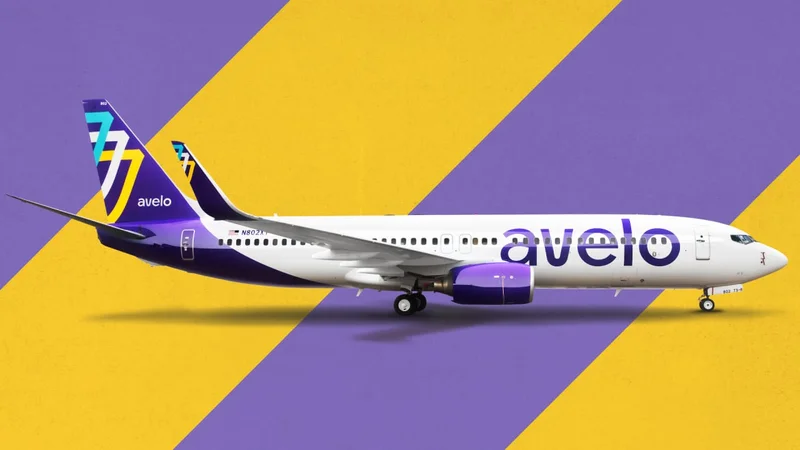
Avelo Airlines is making headlines again, this time with an announcement that would, on the surface, appear to be a clear win for Delaware travelers. The carrier, currently the sole commercial operator out of Wilmington Airport (ILG), is set to launch two new nonstop routes in early 2026: one to Atlanta's Hartsfield-Jackson International Airport (the world's busiest, for those keeping score) and another to Chicago O'Hare. From February 12, 2026, you'll find Avelo flights heading to Atlanta five times a week, and by March 12, Chicago O'Hare will see four weekly connections. This pushes Wilmington's nonstop route count to a respectable fourteen, all serviced by Avelo. On paper, it's a growth narrative, a textbook case of market expansion leveraging a unique operational footprint. But the data, as always, tells a more nuanced story, one that suggests this flight path might not be as clear as the press release implies.
The Growth Metrics vs. The Ground Reality
Let's look at the numbers Avelo is touting. Since beginning operations out of Wilmington (which, for geographical precision, is actually nearer New Castle), the airline claims to have transported over 750,000 customers on more than 5,500 flights. That's a significant volume for a regional operation, suggesting a demand for the convenience Avelo offers. They're even bringing in a new Boeing 737 aircraft in March 2026 to support this expansion. This all paints a picture of robust, strategic growth, a company firmly planting its flag in underserved markets.
However, the picture gets considerably murkier when you pull back from the flight schedules and look at the actual ground. Avelo isn't just flying vacationers; it's also flying detained immigrants for Immigration and Customs Enforcement (ICE) out of Mesa, Arizona. This isn't a minor footnote; it’s a critical data point that fundamentally alters the perception of Avelo’s business model, particularly in the local communities it serves. I've looked at hundreds of these corporate filings and press releases, and the dissonance here is, frankly, stark. The CEO, Andrew Levy, issued a statement earlier this year, framing this ICE charter work as a "sensitive and complicated topic" but ultimately necessary for "stability" and to "keep our more than 1,100 Crewmembers employed."
This is where my analyst's antennae really start to twitch. Levy's argument, that flying deportees provides stability for a public-facing airline whose primary selling point is convenience to local residents, is a fascinating piece of corporate rhetoric. It's like building a beautiful new wing onto a house while the main foundation is visibly cracking. Does the added square footage truly enhance stability, or does it simply add more weight to an already compromised structure? My analysis suggests that what might be a short-term revenue injection could be a long-term brand liability. How does a company quantify the erosion of goodwill against the immediate financial gain of a government contract? What's the projected attrition rate of customers who actively choose not to fly Avelo because of this policy?
Navigating the Headwinds of Public Opinion
The local reaction to Avelo's ICE contract is not abstract; it’s visceral and quantifiable in its own way. Protests have lined Dupont Highway outside Wilmington Airport, a clear visual indicator of public dissent. These aren't just isolated voices; they represent a segment of the very customer base Avelo is trying to attract with its new Atlanta and Chicago routes. More significantly, the Wilmington City Council recently passed a resolution urging the Mayor's administration against agreeing to deals with companies involved in ICE deportations. Councilmember Shané Darby didn't mince words, explicitly stating Avelo was a company to avoid, emphasizing the importance of not using "public dollars to support what is happening with ICE."
This isn't just noise; it's a data set of public and governmental sentiment. While the specific financial impact of these protests on Avelo’s passenger numbers isn't yet public (and I'd love to see that breakdown), the correlation between corporate actions and local backlash is undeniable. Avelo is banking on the sheer convenience of its new routes outweighing this ethical quandary. They're hoping that the promise of direct access to major hubs like Atlanta and Chicago will override the moral objections of potential passengers. But are they truly measuring the depth of this sentiment? Or are they operating under the assumption that price and convenience will always win out, regardless of the underlying corporate ethics? This is a critical methodological critique to make: how is Avelo measuring the impact of this controversy on its core business, beyond just the immediate financial "stability" from the charter flights?
The reality is, while the addition of `avelo flights` to `chicago o'hare` and `atlanta hartsfield-jackson` from `wilmington airport` offers undeniable convenience, it comes with a baggage claim of controversy. Avelo is expanding its network, yes, but it's doing so with a significant, self-imposed headwind. The question isn't just about how many people can fly, but how many will choose to, knowing the full picture.
The True Cost of "Stability"
Avelo's expansion is a classic case of a corporation attempting to grow in two diametrically opposed directions simultaneously. On one hand, they're building out a consumer-friendly network from a small, local airport. On the other, they’re engaging in a highly politicized, ethically charged business that directly alienates a portion of that very consumer base and local governance. The "stability" Andrew Levy speaks of from the ICE contract might bolster their balance sheet in the short term, but it could very well be a Trojan horse, undermining the brand equity and public trust that a growing airline fundamentally needs. The numbers of new routes look good, but the qualitative data from the protests and city council meetings should be ringing alarm bells in their financial models.
Related Articles

US Government Backs Trilogy Metals (TMQ): Why It's Soaring and What It Signals for America's Future
I just read a press release that, on the surface, is about a mining company in Alaska. And I can’t s...

Julie Andrews: Why Her Legacy Endures Beyond Her Iconic Voice
I spend my days analyzing systems. I look at code, at networks, at AI, searching for the elegant des...
Dow Jones Rollercoaster: Up, Down, and Who Even Cares?
Generated Title: Tech's "Normal Pullback" is Just Another Way of Saying "We Lied to You" Okay, so th...

Cassandra Seier: Wall Street's 'Mourning' and the Unspoken Truth
Wall Street's Latest 'Loss': Are We Really Supposed to Buy the Spin on Cassandra Seier's Legacy? Alr...

Plug Stock's Big Jump: What's Actually Happening and Why You Shouldn't Buy the Hype
So, Plug Power is back. Just when you thought the stock was destined to become a footnote in the ann...

Cortez Masto's Shutdown Vote: What Happened and Why?
The Shutdown Show: Cortez Masto's Calculated Game Nevada Senator Catherine Cortez Masto has cast 14...